
“Some beautiful paths can’t be discovered without getting lost.”
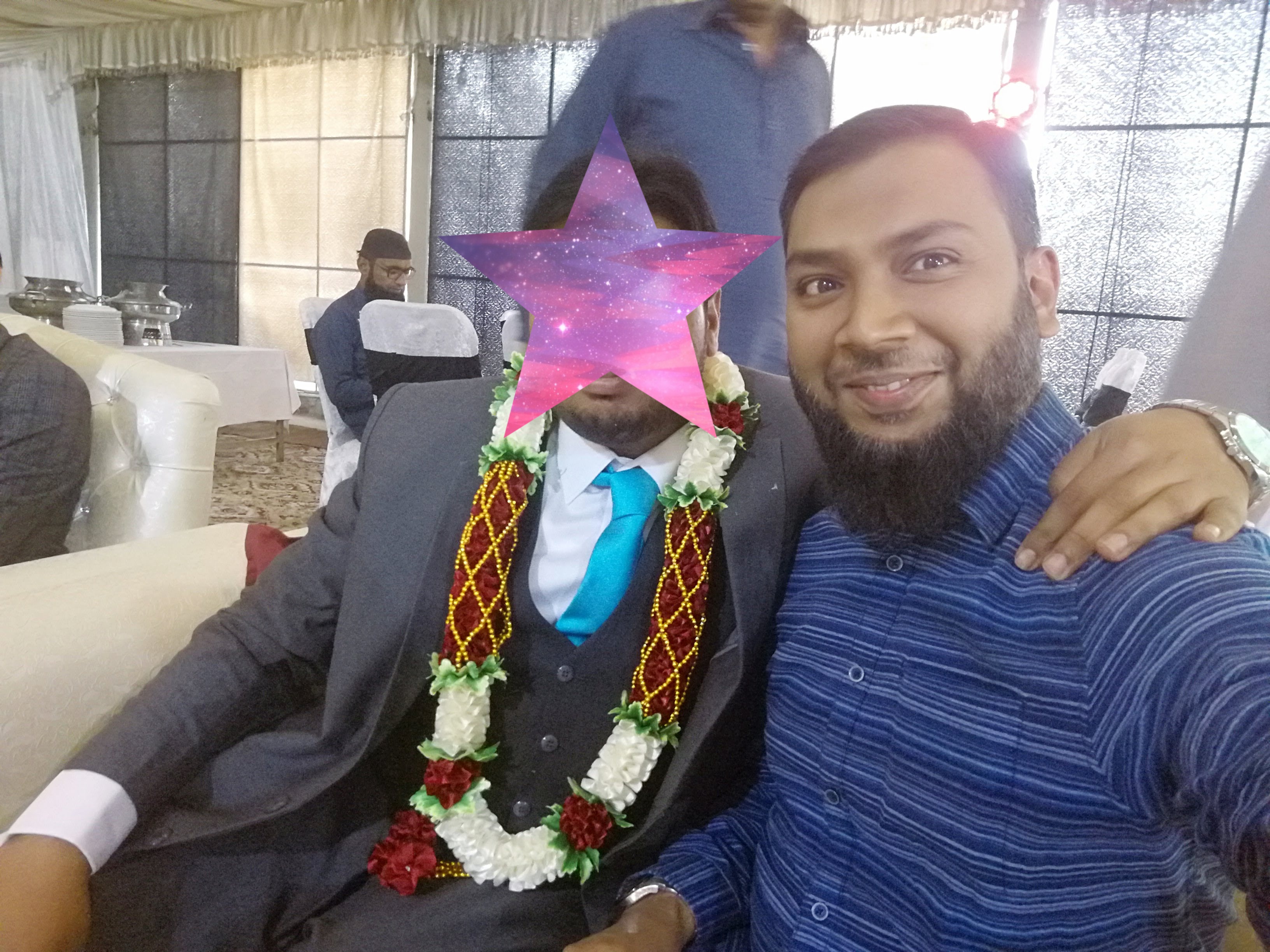
My staff invited me to his wedding. This was the 1st wedding invitation I have received in Pakistan and this was also the 1st wedding invitation from my staff.
I know this will be the 1st of many as I had a relatively young team. During hiring, we made a conscious decision to hire a young team. It was also based on our previous experience when we set up another operation and maintenance project in Malaysia. A young team with decent experience is easy to mold into the culture that we intend. We succeeded in Malaysia and we were hoping to repeat it here.
I was very excited to attend the wedding. It will boost the morale of my team also. However, the only problem is that the wedding is in Kot Adu. Kot Adu is a remote city located 400km south of Lahore. The nearest ‘big’ city is Multan. After a long discussion with my colleague, Shabbir, our driver, and Nadeem, our cook, we decided to make this wedding journey extended to a trip to Multan, the ancient city. Nadeem’s kampung (hometown) is in Multan. It will only make sense to bring Nadeem with us on this journey so he can show us around.
Nadeem has been telling us lots of stories about Multan and Shabbir was happy to ‘tambah kuah’ (spice up) this. It was winter so we needed to plan our road trip properly. The roads will be densely fogged during the night and early morning. We once experienced dense fog and visibility was reduced to mere a few meters. Shabbir was driving us back from the cinema at night which was located within our neighborhood. We could not see the roads and we were circling around the neighborhood for some time before finding our way back. We have also seen many pile-ups on the main roads during fog as the visibility is limited but people still drive fast.
The road trip from Lahore city to Multan will take almost 6 hours as we will be driving on the National Highway. The National Highway has lesser facilities as compared to the Motorways. (The motorway to Multan was still under construction at this time.) The wedding was on Sunday but we decided to go to Multan on Saturday. We moved from our house Saturday morning after the sunrise as the fog became clear. We need to arrive in Multan city around lunch so that we can visit the city before sunset. During winter the day is shorter and the sun sets at around 5 pm.

We decided to have our breakfast on the way. My stomach will not be able to tolerate roadside food. Nadeem packed his famous chicken roll for me. I like his chicken roll. It will be filled with all kinds of vegetables mixed with grilled chicken and rolled with his hand-made ‘roti’. Unlike the Motorway, the National Highway doesn’t have proper R&R. After driving for almost an hour, we stopped at one of the local R&R. It is a single shop and they serve the local favourites. My colleague has the iron man’s stomach. He can eat almost anything and doesn’t have any side effects. After parking our van a.k.a. car, we went straight to the kitchen with Shabbir. The kitchen was decent even though it was not that clean. My colleague ordered roti with chaana (chickpea). I’m good with Nadeem’s chicken roll. They have this sitting place where you can ‘duduk bersila’ to enjoy your food. We sat there and ate our breakfast while enjoying the cool morning breeze. The national highway was not that busy at this time.
We then continued our journey again. The long 6 hours’ drive served us with lots of scenery. However, I was shocked to realise that almost all the lands along the road were already explored. It is not like the scenery you will see when we drive on Malaysia’s north south highway where you will see unexplored land with lots of trees and even forest. It could be because Pakistan and particularly Punjab has a high population per square kilometre. Punjab has a density of more than 350 persons per square kilometre compared to Malaysia which has less than 100 persons per square kilometre. Additionally, Pakistan has been relying on agriculture which requires huge land areas.
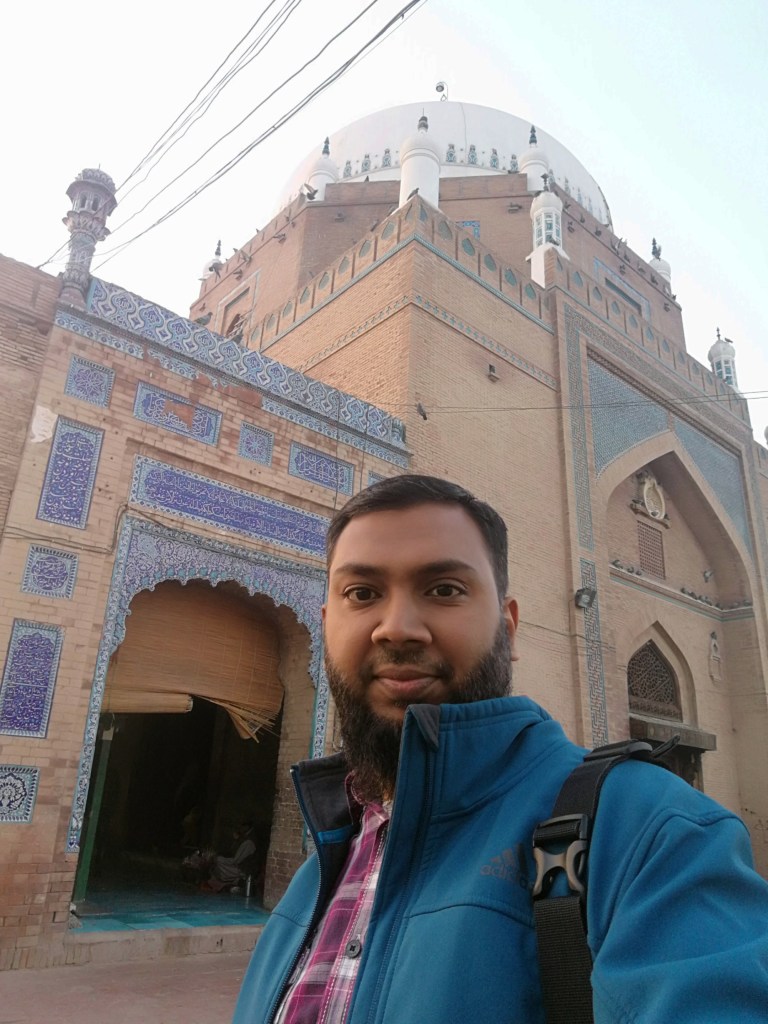
We arrived at Multan around 2pm. Shabbir did an excellent job taking us there timely. After having our lunch in one of the local restaurants we went to explore Multan, the ancient city. Multan is famously known for many shrines of saints. Though we have no specific intentions to visit these shrines, we wanted to enjoy the beautiful 13th century architects. One of the most famous shrines is of Bahauddin Zakariya. His shrine has the combination architecture influence of Iran and Afghanistan. The essential features of this shrine is its combination of three geometric forms—a square, an octagon, and a circle which, coupled with its corner minarets and battered walls, synthesized a style of Indo-Islamic architecture that remains influential to the present day.
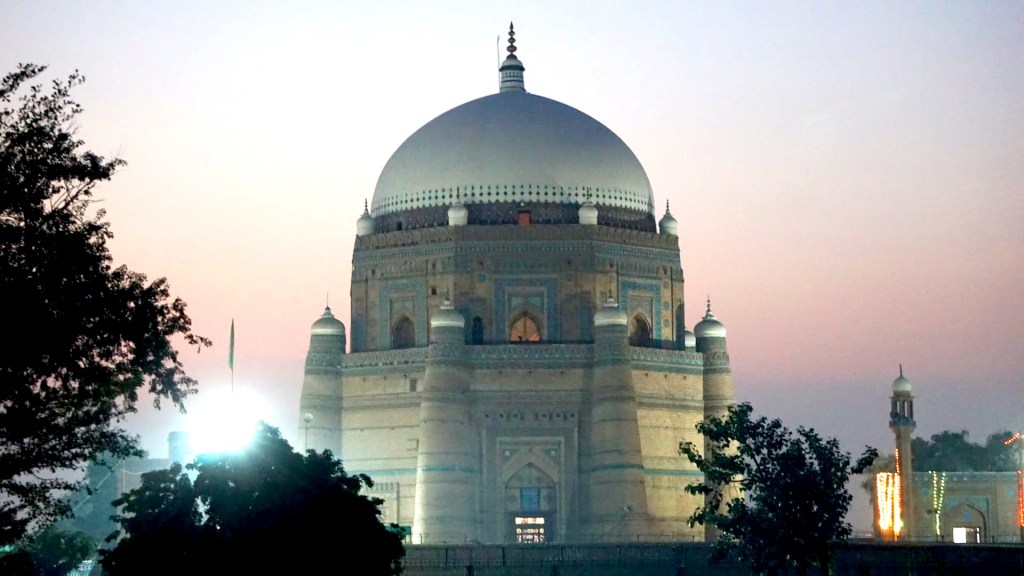
When we arrived, as we were admiring the architecture, I could not stop observing how people are being devoted to the shrine itself. Some Muslims believe that spiritual powers of great Sufi saints were attached to their burial sites. They visit these sites for the purpose of requesting the help of the spirit by engaging in various rituals. I have reservations on this act but I did not want to make any judgments.
We also visited another shrine within the complex, the shrine of the grandson of Bahauddin Zakariya, known as Shah Rukn-e-Alam. While we were enjoying the view and also observing the people, we heard the call for Maghrib prayer. I told Shabbir that we need to quickly go to the masjid. The masjid was located just beside the shrine but it was small. I was worried that if we were late then we need to perform our prayers outside. We quickly made our wudhu (ablution) and entered the masjid and performed our namaz in the front row following the imam.
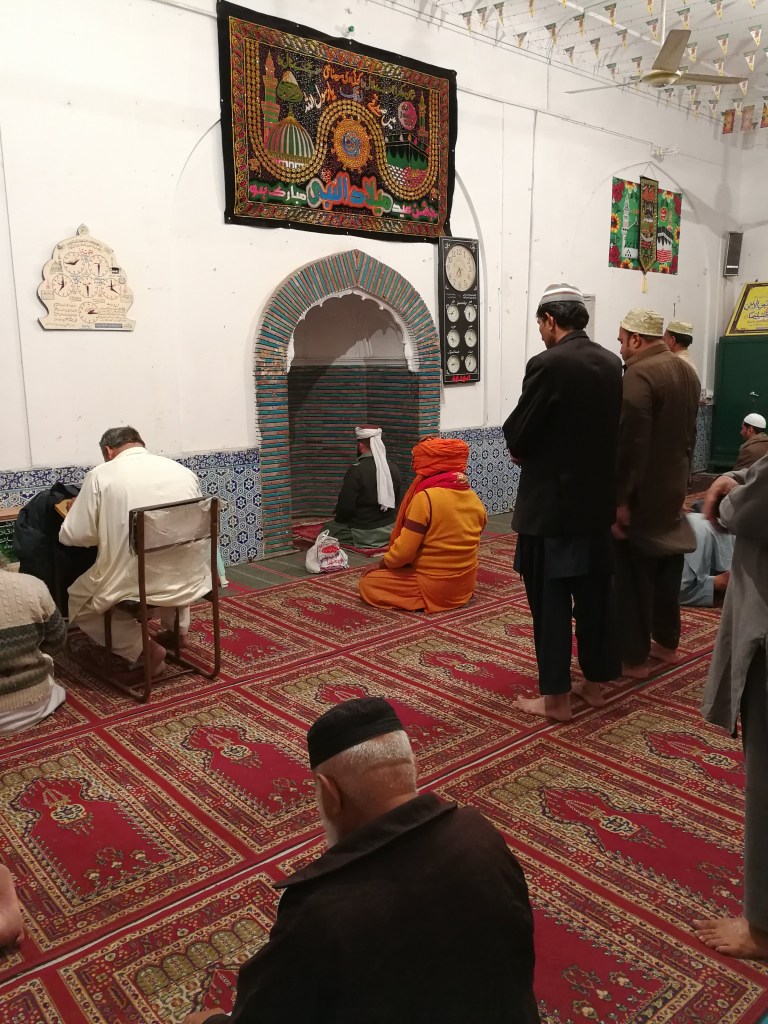
After the namaz, when I turned around, I was shocked to see that the masjid was not even half full. Judging by the sheer numbers of people visiting the shrine, upon the azan the masjid should have been filled fully. This has agitated me. This is exactly why the rituals that these people perform on these shrines are considered to be a deviation from the real Islamic teachings. I noticed people who are selling salts, oil and clothes to be donated to these shrines. They request the help of the deceased but they don’t bother to pray to the almighty creator. He who created all of us even the sufis and even if the sufis had any speciality it was also given by Allah. We should ask Him and only Him.
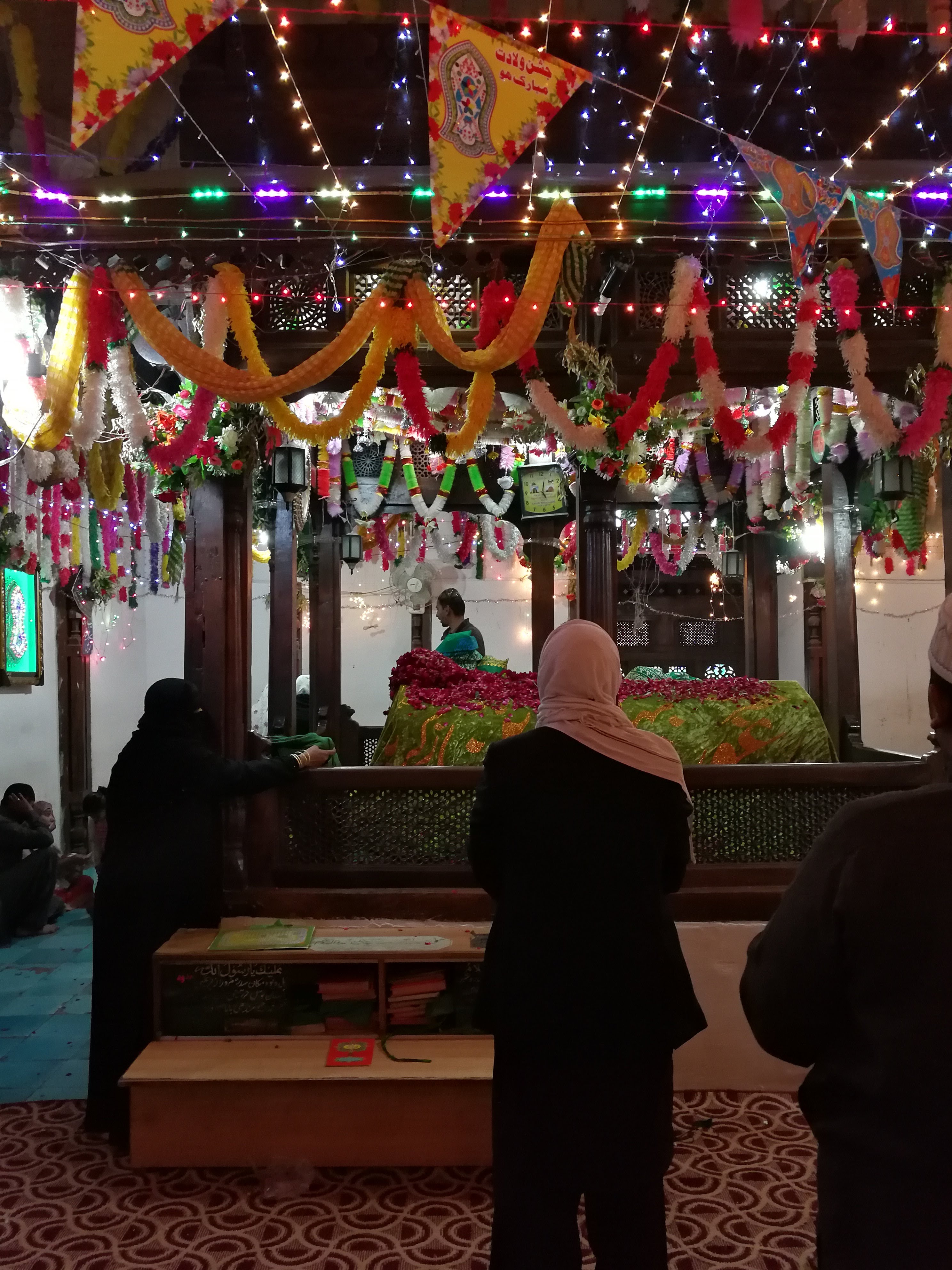
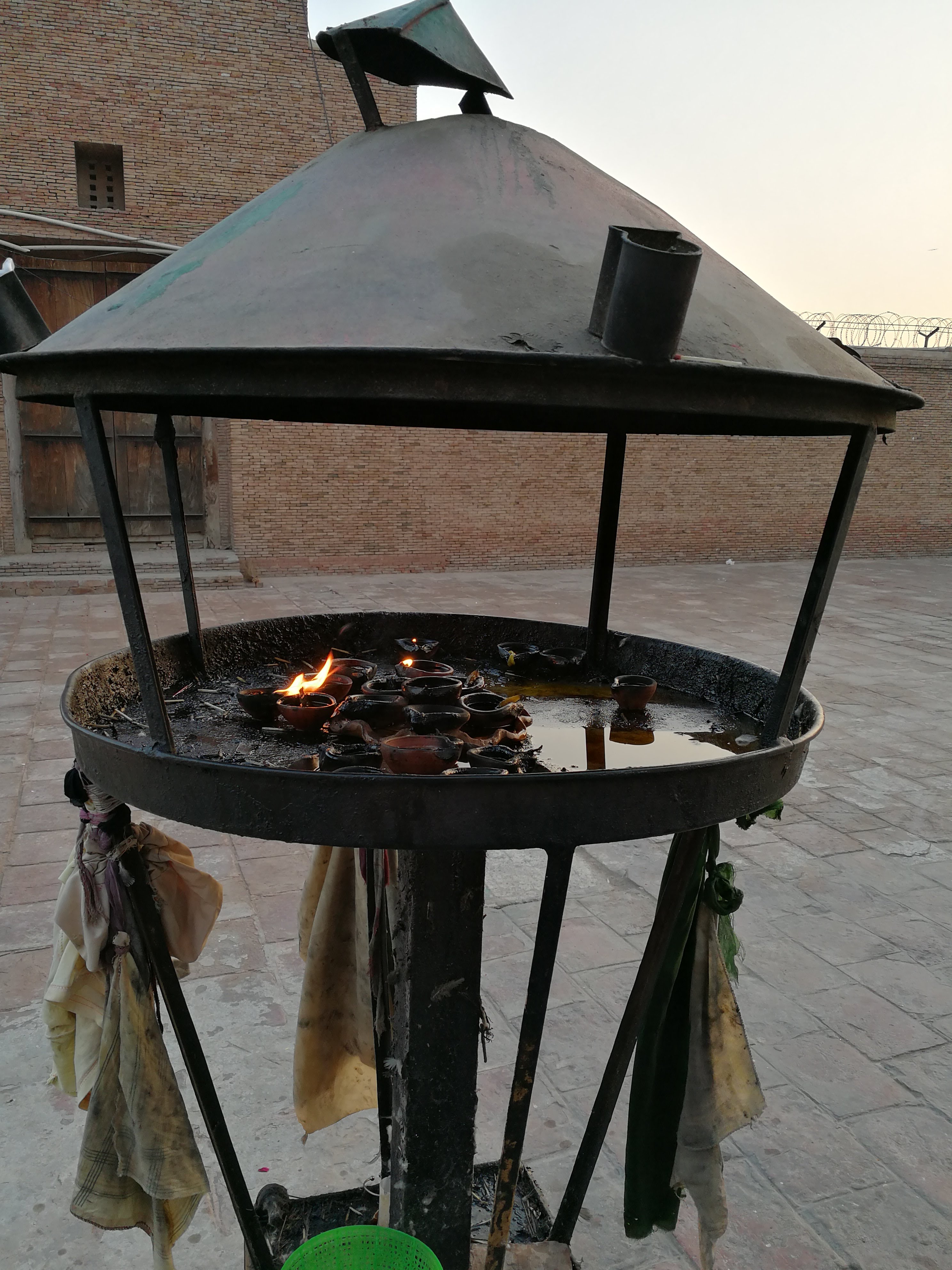
I was frustrated and I don’t want to spend more time there. We called Nadeem to ask if he was ready to receive us. When we arrived in Multan, we dropped Nadeem at his house. He went back earlier to prepare dinner for us. He insisted that we have dinner at his home. I was reluctant because Pakistanis will go above and beyond their means to show their hospitality to their mehman (guests). However, it might be a once in a lifetime chance to visit his family and his mother was also sick and we thought this would be a good chance for us to visit his mother.
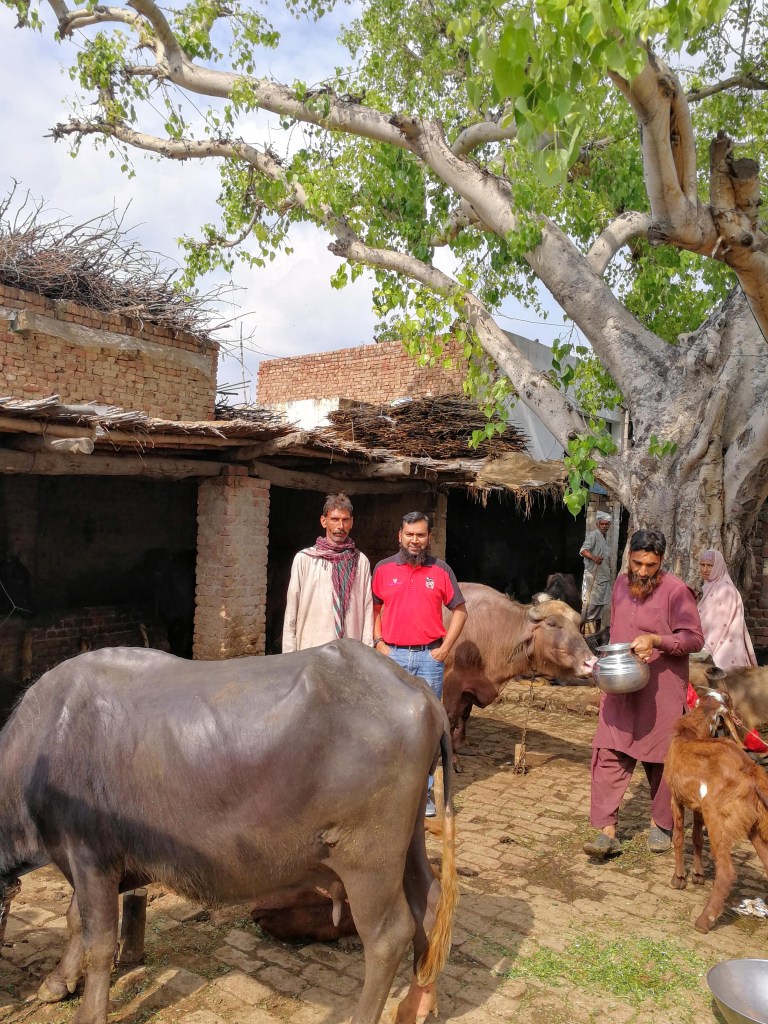
We arrived at his home. The house was very simple. It was built using bricks and the wall was not even plastered. As I entered the gate, I was welcomed to an open area. He had a charpai, a traditional woven bed which is usually used as a ‘sofa’. If you visit the village houses, you will mostly be welcomed to sit in this open area. They don’t have a specific living room. For villagers who have goats or buffalo, this will also be the area it will be kept. You can imagine the aromatic odor as you enter the compound.
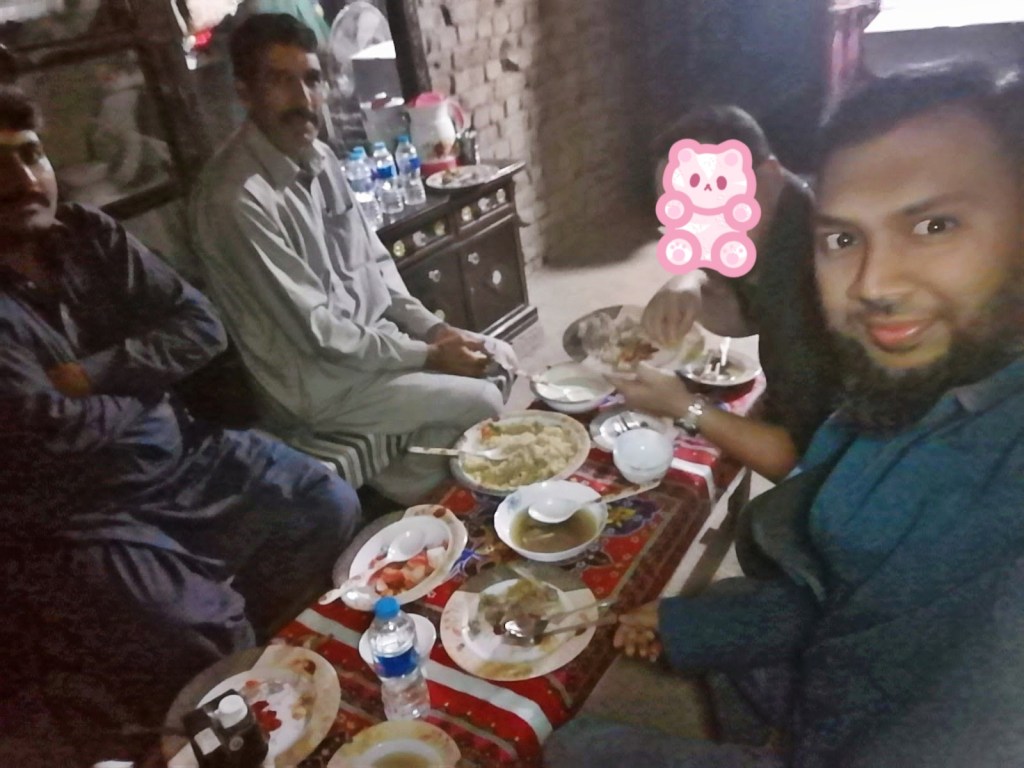
Nadeem have cooked desi chicken (ayam kampung) soup with mutton pulao. Soup is a must menu during winter. Nadeem cooked pulao as he knows we like pulao more than briyani. Pulao is cooked like briyani except the spices are less pungent. My kids also like pulao more than briyani. Unfortunately, the Pakistani pulao spice isn’t easily available here in Malaysia, like briyani.
Nadeem’s family was happy that we visited them. Before we left his house Nadeem’s mother said something in urdu and I barely could listen to what she was saying. She also put her hand on my head and stroked her hand a few times from my head to my face. I later clarified with Shabbir what she was doing. He told me, she was praying for me and this is actually how the elderly show their affection.
We were already very tired, and decided to call it a day. We checked into a hotel which we had booked via Booking.com. Yes, Booking.com is available at almost all the places throughout Pakistan and I can confidently recommend it. However, I have my reservation on Google Maps for Pakistan. We had lots of terrible experiences navigating using Google Maps. I will reserve these experiences for another story.
Tomorrow, we will explore the city and do some shopping before heading to Kot Adu for the wedding function during lunch time.

 Ek Safar (The Journey)